Medication adherence
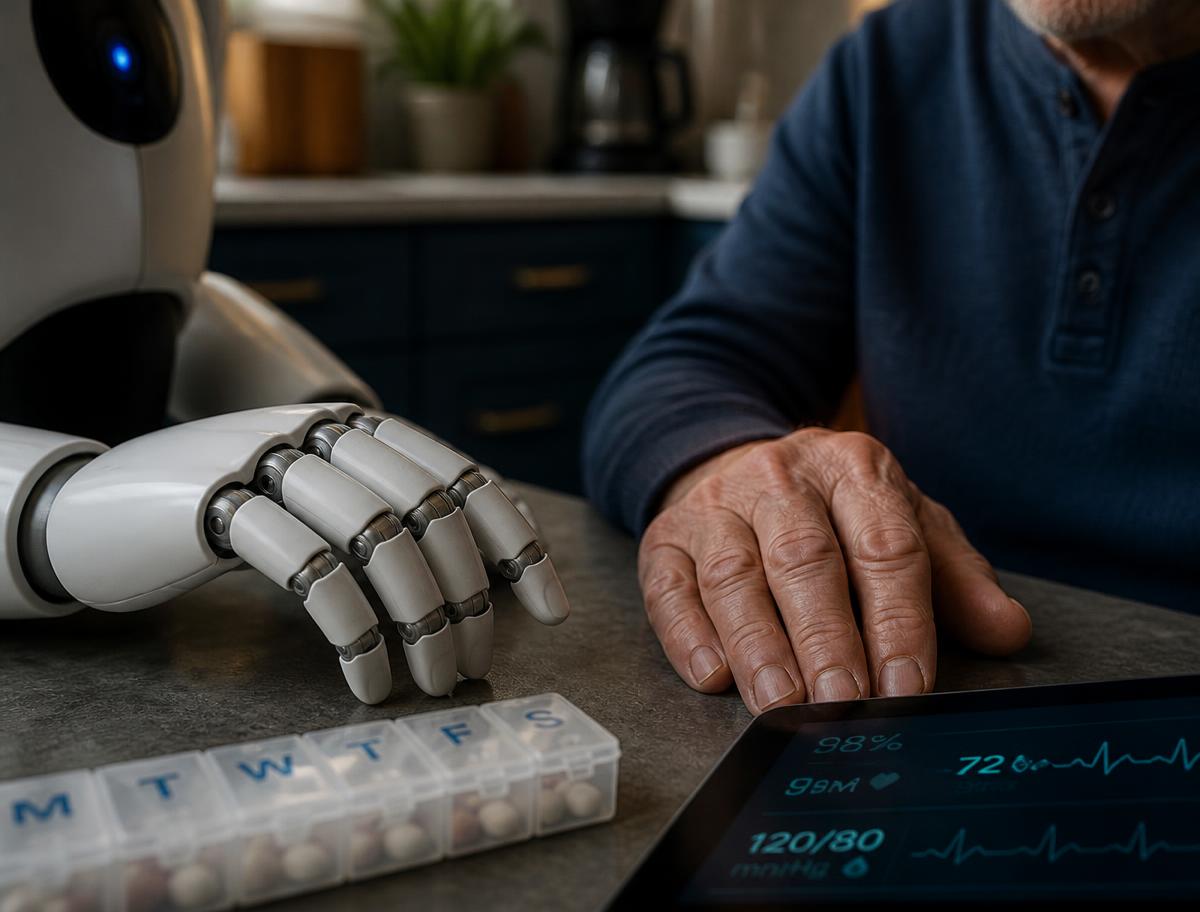
Fetches the right dose at the right time from a locked dispenser, confirms it was taken, and logs it to the care record.
A general-purpose humanoid is only useful in a home if it understands that home. Lovell AI turns a stock G1 into a caregiver that knows the hallway, the routine, and the patient.
Six categories of work, running continuously, all of it written to a record your clinician and family can read.
Fetches the right dose at the right time from a locked dispenser, confirms it was taken, and logs it to the care record.
Stabilizing assistance from bed to chair to bathroom, with gait analysis that flags decline before a fall happens.
Continuous posture tracking. A fall triggers an on-scene check, a voice prompt, and a clinician page in under 90 seconds.
Brings and assists with cuffs, pulse-ox and glucose meters, then streams readings into the clinical dashboard.
Water, meals from the fridge, dropped items, lights, doors and thermostat — the small things that decide whether home is possible.
Conversation, reminders, reading aloud, and video calls with family placed at eye level instead of on a countertop.
Lovell AI is the care model behind the fleet. It maps the home during setup, learns the patient's routine and language, and refines its handling from clinician corrections. Improvements from every supervised shift roll into the model — while patient data stays scoped to that household.
No injections, no wound care, no diagnosis. The robot assists and reports; licensed humans decide and treat.
Every unit supports instant remote teleoperation. Any flagged anomaly routes to an on-shift clinician who can see, speak and act.
Perception runs on-device. Households mark private rooms and hours; clinical audio and video are encrypted and access-logged.
Medication prompts, hydration, mobility support and vitals — the same reliable routine at 7am and at 3am, logged for the care team.


All robot automation across our solutions and services runs on Lovell AI's continuous learning platform — home mapping, routine learning, safe motion, and clinician-corrected improvement. feelWell home is a Lovell AI Certified Partner.
Visit lovell.ai